
 LISTEN TO THE 'CUT TO THE CHASE: PODCAST'

Miami is raising its seawalls. Cities across the country are doing the same. The question now in front of the Supreme Court is whether the oil companies can be made to help pay for it.
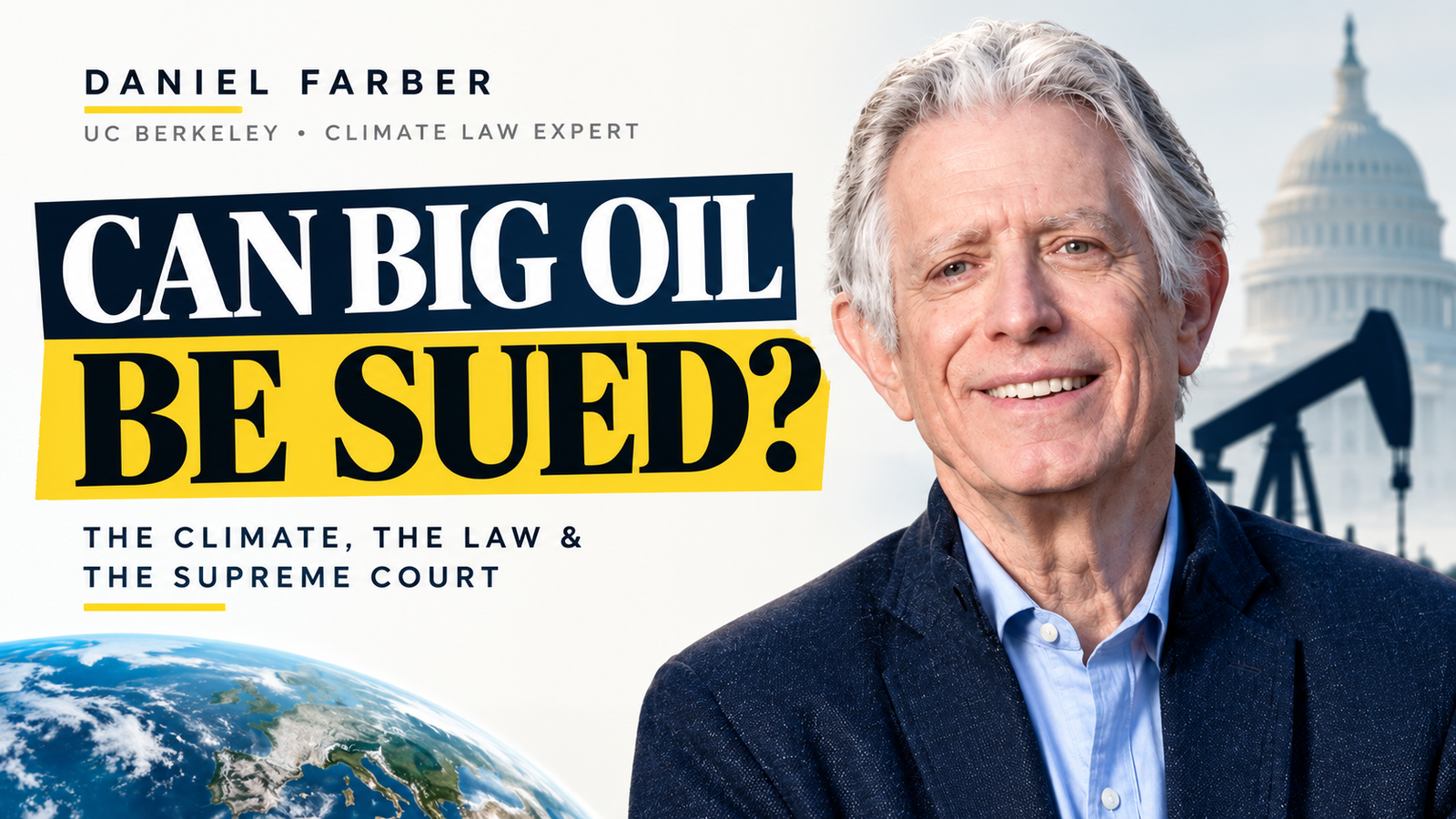
UC Berkeley law professor Daniel Farber joins Gregg to unpack Suncor Energy v. Boulder County. In this case, local governments are seeking compensation from oil companies for climate damage and for allegedly misleading the public about what their own scientists knew. The oil companies’ defense is that climate change is a federal issue under the Clean Air Act, so state courts can’t hear these cases.
Here’s the catch. The Trump EPA has repealed the endangerment finding, the legal foundation that lets the federal government regulate greenhouse gases. Pull that out, Farber explains, and “the whole house of cards falls down.” The move meant to help Big Oil may end up weakening its best legal defense.
The case at a glance:
-
Boulder and Boulder County sued Suncor and ExxonMobil in 2018 over climate costs like wildfires, floods, and heat waves.
-
The Colorado Supreme Court let the case proceed in 2025. The U.S. Supreme Court hears arguments on October 5, 2026.
-
The ruling could decide the fate of dozens of similar lawsuits across the country.
What you’ll learn:
-
What the Suncor case is about, and why it’s the poster child for a second wave of climate litigation
-
The “tobacco playbook” allegations: what oil companies are accused of misrepresenting
-
How preemption works, and why oil companies say states can’t sue at all
-
What the endangerment finding is, and why repealing it could backfire on the industry
-
Why cities and states, not individuals, are bringing these cases so far
-
Why the Supreme Court might sidestep the big questions entirely
-
How attribution science ties emissions to specific companies
-
Whether the Paris Accord is working without the U.S.
Timestamps:
0:00 – Cold open 0:13 – The feds step back from climate regulation 0:47 – Meet Professor Daniel Farber 1:24 – What the Suncor case is all about 3:18 – Why can’t states sue Big Oil? The preemption argument 5:22 – The misrepresentation claims and the tobacco playbook 6:34 – The endangerment finding, explained 8:44 – How the endangerment finding connects to state lawsuits 12:18 – Rock and a hard place: who’s actually suing 15:00 – Can the Supreme Court thread the needle? 17:01 – Proving it: Exxon vs. Chevron vs. everyone else 20:21 – Is the Paris Accord still alive? 22:08 – Wrap-up and a promise to return after the Suncor decision
Daniel Farber is the Sho Sato Professor of Law at UC Berkeley and faculty director of the Berkeley Center for Law, Energy & the Environment. He has written more than 20 books on climate law, disaster law, environmental regulation, cost-benefit analysis, and executive authority.
Contact / Follow Daniel Farber:
- LinkedIn: https://www.linkedin.com/in/daniel-farber-6801729
- Berkeley Law: https://www.law.berkeley.edu
- Berkeley Center for Law, Energy & the Environment: https://www.law.berkeley.edu/research/clee/
- Legal Planet blog: https://legal-planet.org
Sources:
-
Legal Planet: https://legal-planet.org/2026/09/08/legal-planet-guide-to-suncor-energy-v-county-commissioners-of-boulder-county/
-
SCOTUSblog: https://www.scotusblog.com/cases/suncor-energy-inc-v-county-commissioners-of-boulder-county/
-
E&E News: https://www.eenews.net/articles/epa-climate-rollback-could-thwart-big-oils-next-supreme-court-fight/
-
E&E News: https://www.eenews.net/articles/epa-endangerment-repeal-could-expose-industry-to-legal-blowback/
-
The American Prospect: https://prospect.org/2026/03/04/environmental-protection-agency-climate-endangerment-finding-repeal-trump-zeldin-supreme-court/
-
Smith Anderson: https://www.smithlaw.com/newsroom/publications/Supreme-Court-Takes-Up-Climate-Tort-Case-Amid-EPA-Endangerment-Rollback
-
Beveridge & Diamond: https://www.bdlaw.com/publications/climate-change-and-state-authority-potential-broad-implications-of-the-supreme-courts-grant-of-certiorari-in-suncor-energy-inc-v-commissioners-of-boulder-county/
-
The Regulatory Review: https://www.theregreview.org/2026/04/20/reiter-ending-epas-endangerment-finding-wont-end-climate-change-regulation/
-
LegalClarity: https://legalclarity.org/epa-sued-over-endangerment-finding-repeal-last-week/
-
Inside Climate News: https://insideclimatenews.org/news/23082026/suncor-v-boulder-supreme-court-climate-case/
-
Wikipedia: https://en.wikipedia.org/wiki/Suncor_Energy_(U.S.A.)_Inc._v._County_Commissioners_of_Boulder_County
Want more conversations that cut through the noise on science, climate, and the issues shaping our future? Subscribe to Climate Change Environment Science & the Law with Gregg Goldfarb for new episodes every week.