
 LISTEN TO THE 'CUT TO THE CHASE: PODCAST'

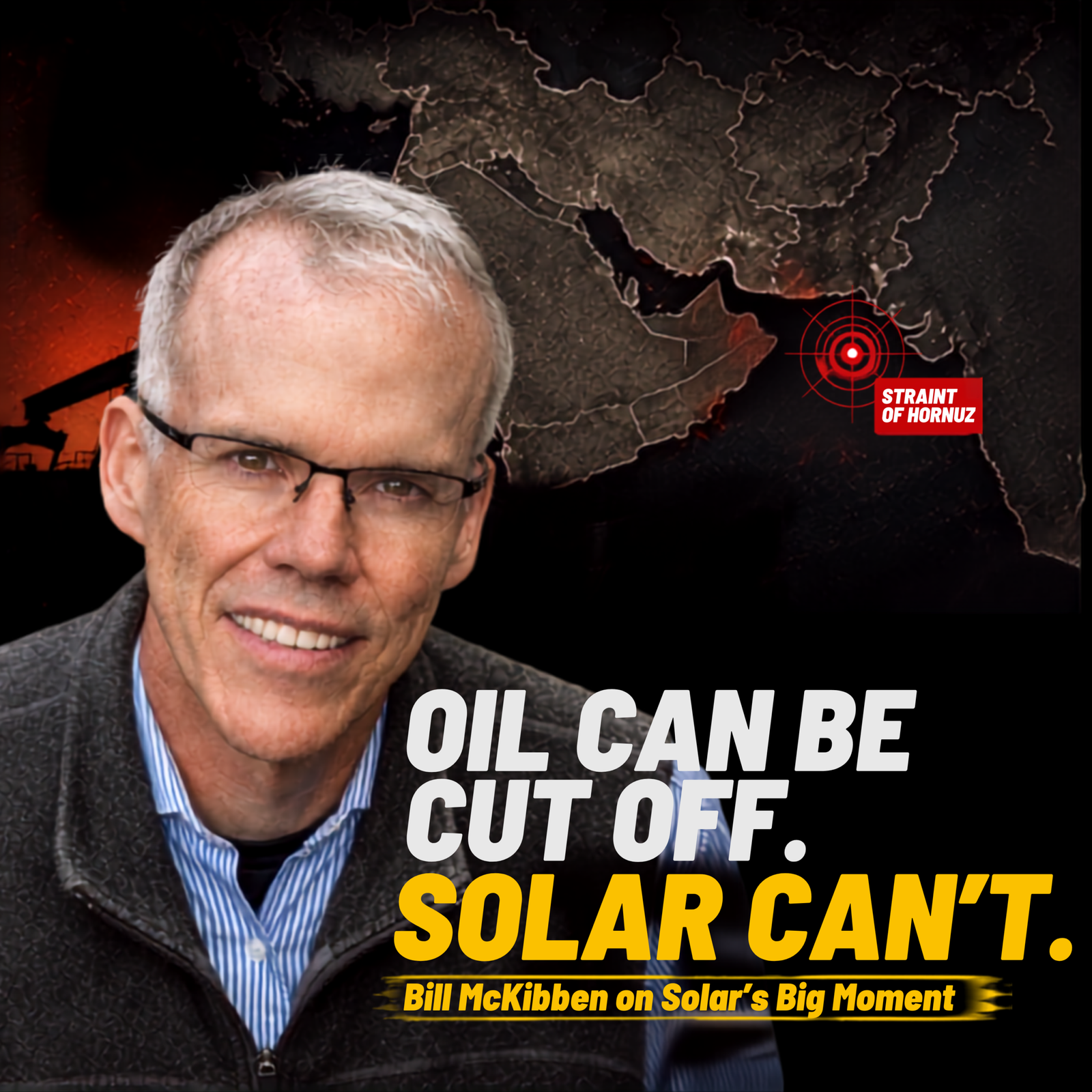
Sunlight travels 93 million miles to reach Earth, and as Bill McKibben points out on this episode of Climate Change Environment Science & the Law, none of those miles pass through the Strait of Hormuz. Host Gregg Goldfarb sits down with the bestselling author of “Here Comes the Sun” to unpack why the Iran conflict, following Russia’s invasion of Ukraine, is becoming the second energy shock of the decade, and why it’s pushing Asian nations that depend on oil and gas shipped through the Gulf to accelerate their pivot to solar, wind, and batteries.
Bill breaks down the numbers behind China’s clean energy build-out, explains why California now generates more than half its electricity from the sun thanks to massive battery buildout, and makes the case that renewables are no longer a fringe bet but the more reliable, and often cheaper — choice for most of the world.
The conversation then turns to American farmland, where Bill separates fact from fiction on solar leasing: the stable income it provides farmers, the rise of agrivoltaics (from French vineyards seeing a jump in Chardonnay yields to sheep grazing beneath panels in New England), and why devoting a small share of U.S. farmland to solar could meet 100% of the country’s energy needs. He closes with a practical tip anyone can use right now, inexpensive, plug-in balcony solar panels that require no electrician and are now legal in ten states, with more expected to follow.
Join Gregg and Bill McKibben on Climate Change Environment Science & the Law as they explore:
- Why the Strait of Hormuz has become a geopolitical argument for solar, wind, and batteries
- How China’s clean energy build-out compares to the rest of the world, and what’s happening across Southeast Asia
- Why California now draws more than half its power from the sun, and the role battery storage plays overnight
- Why some countries are ramping up coal short-term even as long-term investment shifts to renewables
- Why 80% of the world’s population lives in fossil-fuel-importing countries, and what that means for the economics of going solar
- How solar leasing works for farmers, and what percentage of land is typically involved
- What agrivoltaics is, and how shade from solar panels is boosting crop yields and pollinator populations
- Why solar polls well across party lines, even when the motivations differ
- What plug-in balcony solar is, what it costs, and which states have legalized it
- How to get involved through Third Act, the climate advocacy group for Americans over 60
TIME STAMPS
- 00:00 Sunlight does not go through the Strait of Hormuz
- 00:18 Can solar actually power an economy
- 01:14 The second energy shock of the decade
- 02:17 China’s pace, and who else is switching
- 03:44 The US exception: wind and solar rollbacks
- 04:54 Why coal is the patch, not the bet
- 05:27 Batteries and California after sundown
- 06:42 The oil money headwind, and the 80% who import
- 07:58 Farmers, land, and stable income
- 09:18 Corn for ethanol vs the same acres in panels
- 10:20 Agrivoltaics: shade, sheep, and pollinators
- 11:26 “It looks like a monstrosity”
- 12:15 What a farmer earns, and the removal bond
- 13:41 Trump flags at the mailbox, panels on the roof
- 14:26 Balcony solar is legal in 10 states
- 15:33 Push your state, and Bright Saver
- 16:53 Third Act and 350.org
- 17:59 Here Comes the Sun
Bill McKibben is a bestselling author and one of the world’s leading environmental advocates, known for decades of work sounding the alarm on climate change while championing practical solutions like the rise of solar power. He is the founder of 350.org, a global grassroots climate advocacy organization, and Third Act, which mobilizes Americans over 60 for action on climate and democracy. His latest book, “Here Comes the Sun,” explores the accelerating global shift to renewable energy.
Contact / Follow Bill McKibben:
- Organization: 350.org | Third Act
- Website:https://thirdact.org
- Balcony Solar Resource: https://brightsaver.org
Want more conversations that cut through the noise on science, climate, and the issues shaping our future? Subscribe to Climate Change Environment Science & the Law with Gregg Goldfarb for new episodes every week.